Perifit
Perifit Care
Score breakdown: 5 pillars
- Acoustic discretion 25% weightN/ANo motor
- Body-safe materials & hygiene 20% weight5.0/5Body-safe silicone
- Waterproofing 20% weight2.0/5Water-resistant
- Battery & charging 20% weightN/ANot applicable: no charging needed
- Ergonomics & controls 15% weight4.0/5Optional app
Graded from manufacturer data with our published grid; * marks an editorial estimate. The overall score is an editorial rating informed by these pillars, not their average.
Best for Straightforward Biofeedback Training
- Noise
- No motor
- Battery
- No charging needed
- Water
- Water-resistant
- Material
- Body-safe silicone
Affiliate link: we may earn a commission at no extra cost to you. Specs from manufacturer data.
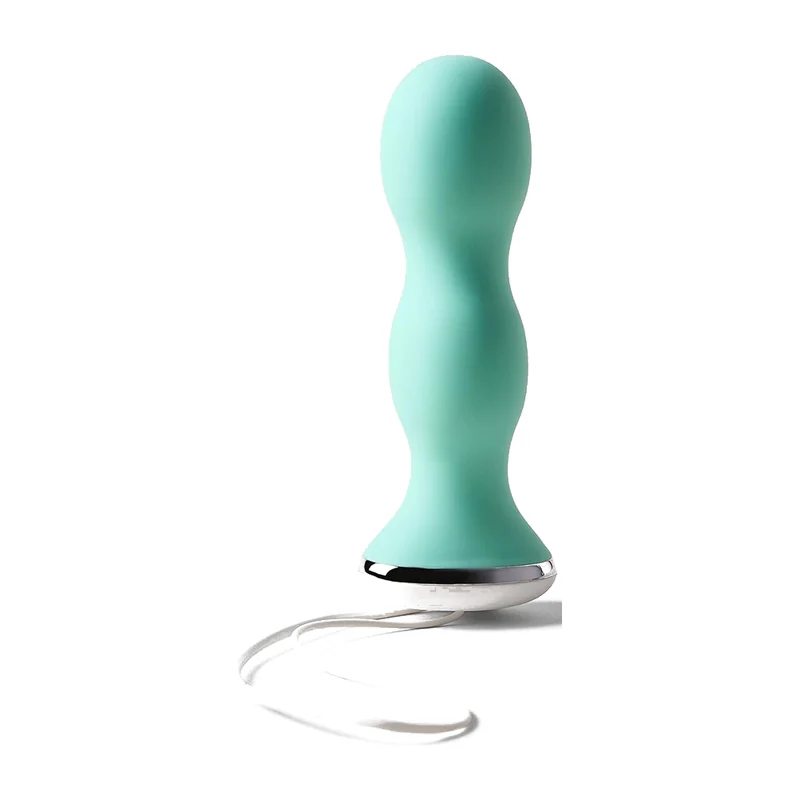
The Perifit Care is Perifit’s original app-connected pelvic floor trainer: a silicone probe whose two sensors send readings over Bluetooth Low Energy to the free Perifit app, where each contraction controls a game on screen. It has no stimulation motor and no charging port: Perifit says its probes run on a battery designed to last for years that never needs recharging. Perifit sells it in green and pink. This review is based on Perifit’s official product pages and its official first-use guide; we have not run clinical or laboratory tests.
What we like
- Dual sensors flag faulty contractions
- More than 20 app games, 7 personalized programs
- No recharging; battery covered for 5 years
- Straightforward routine, done lying down
Limitations
- Larger than the Care+, not described as flexible
- No motion sensor or multi-position exercises
- Not to be submerged; every session needs the app
On this page
Quick Verdict
Our score: 4.4 / 5, third in our pelvic floor trainer ranking, behind the Elvie Trainer (4.7) and the Perifit Care+ (4.6). The Care keeps the essentials of Perifit’s system: a dual-sensor design that flags faulty contractions, more than 20 app games with personalized programs, and a battery that never needs charging. What it leaves out is what the Care+ adds: a smaller, flexible body, motion detection and exercises in several positions. Perifit’s own first-use guide also says it should not be submerged.
Technical Specifications
| Feature | Perifit Care |
|---|---|
| Type | App-connected pelvic floor trainer with real-time biofeedback |
| Sensors | Dual-sensor system: a superficial sensor for pelvic floor contractions and a deep sensor for abdominal pressure; no motion sensor |
| Insertable part | 8.3 cm long, 3.1 cm in diameter (3.2 × 1.2 in) |
| Design | One-piece probe that Perifit does not describe as flexible; tail that stays outside the body; white collar for positioning |
| App | Free Perifit app (App Store, Google Play): more than 20 games, 7 personalized programs, progress tracking in 5 dimensions |
| Connectivity | Bluetooth Low Energy, antenna in the external tail |
| Power | Built-in battery designed to last for years; no recharging; 5-year battery warranty |
| Water resistance | Water-resistant: Perifit’s first-use guide advises against submerging it or using it in the bath (its product page mentions a “100% waterproof design”); no IP rating given |
| Body | Silicone |
| Colours | Green, pink |
| Noise | No motor: feedback is visual, in the app |
| Regulatory status | Perifit states that the Care and Care+ are FDA-cleared devices |
Specifications from perifit.co (Perifit Care and Perifit Care+ product pages, “Using Perifit Care for the first time” guide), consulted in November 2026. Perifit does not state the weight, the supported phone operating system versions or the sensors’ accuracy.
Design & Ergonomics
The Care is the larger of Perifit’s two trainers: its insertable part measures 8.3 cm by 3.1 cm, against 6.3 cm by 2.7 cm for the Perifit Care+. In the comparison table on its product pages, Perifit reserves the smaller size and the flexible body to the Care+, so the Care is the firmer, one-piece option. A tail stays outside the body and makes removal straightforward.
Perifit’s first-use guide describes a simple routine: press the on/off button until you hear a click, check that the green light blinks, then open the Perifit app, which connects to the device by itself (Perifit advises against pairing it from the phone’s Bluetooth settings). Training is done lying down on a flat surface, knees bent, with the white collar aligned front to back. The device is designed for short app sessions and for one person. Perifit recommends speaking to a healthcare provider before starting, since pelvic floor symptoms are not always caused by weak muscles.
Dual-Sensor Biofeedback
Biofeedback means showing a physiological signal as it happens so that you can correct your technique. The Care uses the same two-sensor approach as the Care+:
- Superficial sensor: reads the contractions of the pelvic floor muscles, which drive the games in the app.
- Deep sensor: detects changes in abdominal pressure. Perifit uses it to flag faulty contractions, such as bearing down with the abdominal muscles instead of lifting the pelvic floor.
What the Care does not have is the Care+’s motion sensor, which detects position and movement: on the Care, the routine is designed for training lying down, and Perifit’s multi-position and fitness-style exercises are reserved for the Care+. Perifit does not publish accuracy or resolution figures for either sensor, so we compare the documented features, not measurement precision.
App & Gamification
The Perifit app is free on the App Store and Google Play, and Perifit says new games are added through free updates. Perifit lists more than 20 games in which your contractions steer a character or object on screen, seven personalized training programs and progress tracking across five dimensions. Perifit notes that access to some options depends on the probe you use: the advanced exercises and training positions belong to the Care+. Every session needs a phone or tablet with Bluetooth, and the app handles personal training data: review its privacy settings and permissions.
Battery & Power: No Charging
The Care has no charging port and no cable. Perifit says its probes are powered by an ultra long-lasting battery designed to last for years of regular use and that you will never need to recharge them. The battery is covered by a five-year warranty. Perifit gives no figure in hours or sessions, so the five-year mark is a warranty period, not a stated battery life. The Elvie Trainer, by contrast, charges inside its carry case.
Body-Safe Materials
The Care is made of silicone. Perifit describes the grade of silicone it uses and states that each device is individually quality-checked before shipping. A smooth, non-porous silicone surface is easier to keep clean than porous materials. To understand what silicone grade claims mean, see our guide to body-safe silicone and materials.
Perifit’s first-use guide says the device is meant to be inserted without lubricant and that a water-based lubricant can be used if insertion is uncomfortable: silicone-based lubricants can degrade silicone surfaces over time, as our lubricant compatibility guide explains.
Noise Level & Discretion
Like the other pelvic floor trainers we review, the Care has no stimulation motor, so there is no decibel figure to compare: our specification panels show “No motor” rather than a dB rating. The feedback appears on your phone, so discretion depends mainly on where you use that screen.
Water Resistance, Hygiene & Care
Perifit’s sources differ here. Its product pages mention a “100% waterproof design” for its probes, but its “Using Perifit Care for the first time” guide describes the Care as water-resistant and says it should not be submerged or used in the bath. We follow the more cautious instruction and list the Care as “Water-resistant”, without an IP rating. Our guide to IPX water ratings explains why a rating matters.
- Before and after each session: wash the probe and tail with warm, soapy water, as Perifit’s guide recommends, then rinse thoroughly without submerging the device.
- Collar: if you remove it, wash it separately so that no water stays trapped between the two parts.
- Drying: pat dry with a lint-free cloth and let the device air-dry completely before storage.
- Storage: keep it in a clean, breathable pouch, away from direct sunlight and from products made of porous materials.
- Personal use: a pelvic floor trainer is designed for one person and should not be shared.
For a step-by-step routine for motor-free trainers, see our device cleaning and material care guide.
Who It’s For (and Who Should Skip It)
Who it’s for
The Care suits people who want Perifit’s dual-sensor feedback and game library in a straightforward routine done lying down, and who do not want to think about charging. For the differences with the smaller, flexible model, see our Perifit Care vs Care+ comparison.
Who should skip it
Those who want a smaller, flexible probe or exercises in several positions should choose the Perifit Care+; those who prefer a short, focused routine with a charging case may prefer the Elvie Trainer. Anyone with pain, a pelvic health condition or a recent childbirth should first speak to a healthcare professional, such as a pelvic health physiotherapist.
Frequently asked questions
Does the Perifit Care need charging?
No. Perifit says its probes run on a built-in battery designed to last for years of regular use and never need recharging. The battery has a five-year warranty; Perifit does not state a battery life in hours or sessions.
What is the difference between the Perifit Care and the Care+?
Both use a superficial sensor and a deep sensor that flags faulty contractions, and both work with the same app. The Care+ is smaller (6.3 × 2.7 cm against 8.3 × 3.1 cm), has a flexible body and adds motion detection for exercises in several positions. See our Perifit Care vs Care+ comparison for the details.
Can the Perifit Care go in water?
Not submerged. Perifit’s first-use guide describes it as water-resistant and says it should not be submerged or used in the bath: wash it with warm, soapy water and rinse it without immersing it.
Verdict
The Perifit Care earns a 4.4 rating in our Pelvic Floor Trainers category, behind the Elvie Trainer (4.7) and the Perifit Care+ (4.6). Its strengths are those of Perifit’s system: a dual-sensor design that separates the pelvic floor contraction from abdominal pressure to flag faulty technique, more than 20 app games with seven personalized programs, and a battery that never needs charging. Because it has no stimulation motor, this score is not comparable with the scores of the stimulation devices we review.
The trade-offs: a larger probe that Perifit does not describe as flexible, no motion detection or multi-position exercises, an instruction not to submerge it, and every session depends on the app and a phone. It is a training aid, not a treatment: for any pelvic health concern, the right first step is a healthcare professional.
