Comparison
Perifit Care vs Perifit Care+: Original vs Compact, Flexible Trainer
On this page
The Perifit Care and the Perifit Care+ are Perifit’s two app-connected pelvic floor trainers. They share the essentials: a dual-sensor system that separates the pelvic floor contraction from abdominal pressure to flag faulty contractions, the same free Perifit app with more than 20 games, a Bluetooth Low Energy antenna in the external tail and a battery that never needs charging. What separates them is the probe itself and what it can track: the Care+ is smaller and flexible and adds motion detection for exercises in several positions, while the original Care is larger, is not described as flexible and is designed for training lying down. This comparison is based on Perifit’s official product pages, including the comparison table Perifit publishes for its two models, and on its first-use guide.
Disclosure: we may earn a commission through links on this page, at no extra cost to you. Our verdicts are editorial and never paid for. How we make money.
Quick verdict
Choose the Perifit Care if…
- you want Perifit’s dual-sensor feedback and game library in a straightforward routine done lying down;
- you do not need motion detection or exercises in several positions;
- a larger, one-piece probe suits you: 8.3 × 3.1 cm for the insertable part.
Choose the Perifit Care+ if…
- you want a smaller probe (6.3 × 2.7 cm) with a flexible body that bends during insertion;
- you want motion detection, multi-position training and Perifit’s fitness-style exercises;
- you want a device that Perifit’s product page describes as having a “100% waterproof design”.
The Care+ is second in our pelvic floor trainer ranking (4.6/5) and the Care third (4.4/5). Both deliver the same core biofeedback, so the question is whether you will use what the Care+ adds: a smaller, flexible fit, motion detection and exercises beyond the lying-down routine. If you will, the Care+ is the better trainer; if a simple routine is all you want, the Care covers it.
Specifications side by side
Values from Perifit’s official product pages, its Care / Care+ comparison table and its first-use guide. Perifit publishes no battery life in hours, no IP rating and no sensor accuracy figures for either model.
| Criteria | PerifitPerifit CareCheck Price | PerifitPerifit Care+Check Price |
|---|---|---|
| Pros |
|
|
| Cons |
|
|
| Sensors | Superficial and deep sensors | Superficial and deep sensors |
| Faulty contractions | Flagged (abdominal pressure) | Flagged (abdominal pressure) |
| Motion detection | No | Yes, position and movement |
| Exercises | Training lying down | Several positions, fitness |
| Insertable part | 8.3 × 3.1 cm | 6.3 × 2.7 cm |
| Flexible body | No, per Perifit’s table | Yes |
| App | 20+ games, 7 programs | 20+ games, 7 programs |
| Connectivity | Bluetooth Low Energy | Bluetooth Low Energy |
| Power | No recharging, 5-year warranty | No recharging, 5-year warranty |
| Water | Water-resistant, no immersion | “100% waterproof”, no IP |
| Noise | No motor | No motor |
| Waterproof | Water-resistant | Waterproof |
| Battery life | No charging needed | No charging needed |
| Material | Body-safe silicone | Body-safe silicone |

Size and comfort: one-piece probe or compact, flexible body
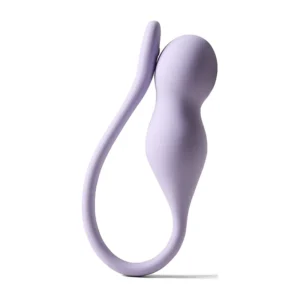
This is the most visible difference. The insertable part of the Perifit Care measures 8.3 cm long and 3.1 cm in diameter, according to Perifit, and Perifit’s comparison table marks it as having neither the “small design” nor the “flexibility for a better fit” of the Care+: it is the larger, firmer, one-piece option. The Perifit Care+ measures 6.3 cm by 2.7 cm and has a body that Perifit says bends during insertion, with a removable collar to keep it in position. Both have a tail that stays outside the body and makes removal straightforward. If the larger size of the Care is a concern, the Care+ is the one Perifit designed to address it.
Sensors and exercises: what motion detection adds
Both models use the same two sensors. The superficial sensor reads the pelvic floor contraction that drives the games; the deep sensor detects changes in abdominal pressure, which Perifit uses to flag faulty contractions such as bearing down instead of lifting. On this core function, Perifit makes no distinction between the two.
The Care+ adds a motion sensor that detects position and movement. Perifit uses it for more precise tracking and to unlock training in several positions and fitness-style exercises that the Care does not offer. The Care‘s routine, as Perifit’s first-use guide describes it, is done lying down with the knees bent. If you plan to train in other positions or to progress to more demanding exercises, the motion sensor is the reason to choose the Care+.
App and games
Both trainers work with the same free Perifit app on the App Store and Google Play: more than 20 games driven by your contractions, seven personalized training programs and progress tracking across five dimensions, with new games added through free updates. Perifit notes that access to some options depends on the probe: the advanced exercises and multi-position workouts are the Care+’s. Either way, every session needs a phone or tablet with Bluetooth.
Battery and power
There is no difference here. Perifit says its probes run on an ultra long-lasting battery designed to last for years of regular use, never need recharging and come with a five-year battery warranty. Neither has a charging port or cable. Perifit gives no battery life in hours or sessions for either model, so the five years are a warranty period, not a stated battery life. For a trainer that charges in its carry case instead, see our Elvie Trainer vs Perifit Care+ comparison.
Materials, water resistance and care
- Materials: both are made of silicone, which Perifit describes as a high grade; learn what silicone claims mean in our guide to body-safe silicone and materials.
- Water: Perifit’s product pages describe its probes as having a “100% waterproof design”, but its “Using Perifit Care for the first time” guide says the Care is water-resistant and should not be submerged or used in the bath. We list the Care as “Water-resistant” and the Care+ as “Waterproof”, neither with an IP rating; our guide to IPX water ratings explains why a rating matters.
- Cleaning: wash the probe and tail with warm, soapy water before and after each session, rinse without submerging the Care, and let both dry completely before storage. If you remove the collar, wash it separately.
- Lubricant: Perifit says the device is meant to be inserted without lubricant and that a water-based one can be used if needed; see our lubricant compatibility guide.
Price
We do not list prices, which vary by country and promotion, so we leave the value judgement to you: compare the current prices on Perifit’s store with the features above. The Care+’s extra cost buys a smaller, flexible probe, motion detection and the multi-position and fitness exercises; the sensors, app, games and battery are the same on both.
Where they rank
In our pelvic floor trainer ranking, the Elvie Trainer is first (4.7/5), the Perifit Care+ second (4.6/5) and the Perifit Care third (4.4/5). Because these trainers have no stimulation motor, their scores are not comparable with those of the stimulation devices we review. A trainer is a training aid, not a treatment: anyone with pain, a pelvic health condition or a recent childbirth should first speak to a healthcare professional.
Read the full reviews
- Perifit Care review: dual sensors, app, battery and care
- Perifit Care+ review: dual sensors, motion detection, app and care
Frequently asked questions
What is the difference between the Perifit Care and the Care+?
Both use the same superficial and deep sensors, app and charge-free battery. The Care+ is smaller (6.3 × 2.7 cm against 8.3 × 3.1 cm), has a flexible body and adds motion detection for exercises in several positions; the Care is designed for training lying down.
Do both detect faulty contractions?
Yes. On both models, the deep sensor detects changes in abdominal pressure, which Perifit uses to flag faulty contractions such as bearing down instead of lifting the pelvic floor.
Do they need charging?
No. Perifit says both run on a built-in battery designed to last for years and never need recharging, with a five-year battery warranty. Perifit does not state a battery life in hours.
Can they be submerged?
Not the Perifit Care: Perifit’s first-use guide says it should not be submerged or used in the bath. Perifit’s product pages describe its probes as having a “100% waterproof design”, without an IP rating.
This comparison provides general information and is not medical advice. Always follow the manufacturer’s instructions for use and cleaning.